
La lingua inglese, come l'italiano, offre strumenti grammaticali specifici per esprimere confronti. Tra questi, i gradi comparativi e superlativi degli aggettivi rivestono un'importanza fondamentale per articolare pensieri complessi e descrivere sfumature. Comprendere e saper utilizzare queste forme è cruciale per una padronanza avanzata della lingua, specialmente per gli studenti che affrontano sfide di apprendimento specifiche come i Disturbi Specifici dell'Apprendimento (DSA). Questo articolo si propone di esplorare in profondità la formazione e l'uso dei comparativi e superlativi in inglese, fornendo un quadro chiaro e strutturato, con particolare attenzione alle esigenze degli studenti DSA.
Cosa Sono Comparativo e Superlativo in Inglese?
Il comparativo e il superlativo sono due forme grammaticali utilizzate per confrontare le qualità o le caratteristiche di due o più cose, persone o concetti nella lingua inglese. Anche in italiano li abbiamo, anche se forse i tempi delle scuole elementari in cui li hai studiati sono un po' lontani e non ricordi con esattezza!
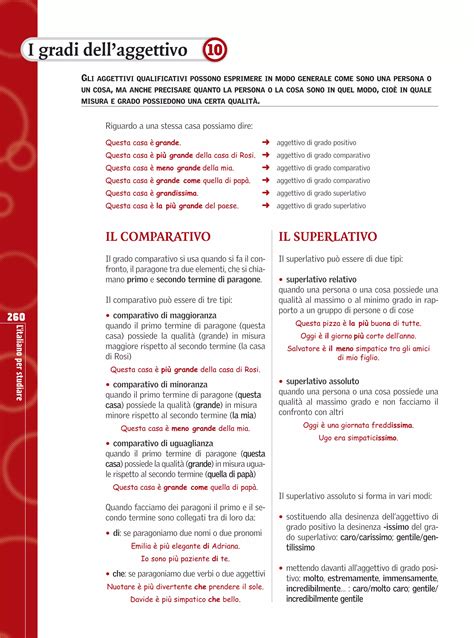
Per rinfrescarti la memoria, in italiano:
- Il comparativo si forma scrivendo "più/meno + aggettivo + di" (es. "Lei è più alta di me").
- Il superlativo assoluto si forma aggiungendo il suffisso "-issimo/a" (es. "altissima").
- Il superlativo relativo si forma scrivendo "il più/meno + aggettivo + gruppo" (es. "il più bello della scuola").
Ora che abbiamo ben chiaro l'argomento, approfondiamolo per quanto riguarda la lingua inglese.
Il Comparativo in Inglese
Il comparativo si utilizza per confrontare due cose, persone o concetti e stabilire se uno è più grande, migliore, veloce, ecc., dell'altro.
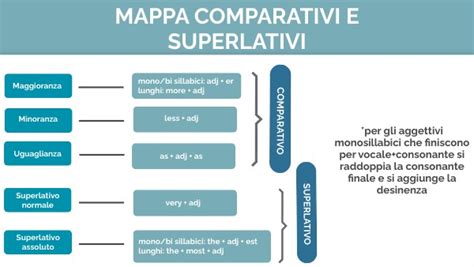
La sua formazione segue regole precise, che dipendono dalla lunghezza dell'aggettivo:
Aggettivi brevi (una o due sillabe): Si aggiunge il suffisso "-er" all'aggettivo.
- Esempio: tall → taller (più alto)
- Esempio: big → bigger (più grande)
- Esempio: cheap → cheaper (più economico)
Aggettivi brevi che terminano in -y: Si elimina la "-y" e si aggiunge "-ier".
- Esempio: easy → easier (più facile)
- Esempio: heavy → heavier (più pesante)
- Esempio: pretty → prettier (più carino)
Aggettivi lunghi (due o più sillabe, tranne quelli che terminano in -y): Si antepone la parola "more" all'aggettivo.
- Esempio: interesting → more interesting (più interessante)
- Esempio: expensive → more expensive (più costoso)
- Esempio: historical → more historical (più storico)
In entrambi i casi (aggettivi brevi e lunghi), dopo il comparativo si utilizza la congiunzione "than", che corrisponde al nostro "di".
Esempi pratici:
- She is taller than her sister. (Lei è più alta della sorella.)
- This book is more interesting than that one. (Questo libro è più interessante di quello.)
- My sister is taller than me. (Mia sorella è più alta di me.)
- The grey jacket is more expensive than the blue one. (La giacca grigia è più costosa di quella blu.)
- The first house is nicer than the second one. (La prima casa è più carina della seconda.)
Il Superlativo in Inglese
Il superlativo si utilizza per indicare che una cosa, persona o concetto possiede la qualità più elevata all'interno di un gruppo o di una determinata categoria.
Anche in questo caso, la formazione dipende dalla lunghezza dell'aggettivo:
Aggettivi brevi (una o due sillabe): Si aggiunge il suffisso "-est" all'aggettivo e si antepone l'articolo determinativo "the".
- Esempio: tall → the tallest (il più alto)
- Esempio: big → the biggest (il più grande)
- Esempio: cheap → the cheapest (il più economico)
Aggettivi brevi che terminano in -y: Si elimina la "-y" e si aggiunge "-iest", preceduto da "the".
- Esempio: easy → the easiest (il più facile)
- Esempio: heavy → the heaviest (il più pesante)
- Esempio: pretty → the prettiest (il più carino)
Aggettivi lunghi (due o più sillabe, tranne quelli che terminano in -y): Si antepone l'espressione "the most" all'aggettivo.
- Esempio: interesting → the most interesting (il più interessante)
- Esempio: expensive → the most expensive (il più costoso)
- Esempio: historical → the most historical (il più storico)
In questo caso, è fondamentale ricordarsi l'uso dell'articolo determinativo "the" per rendere chiaro che si tratta di uno specifico, il migliore/più bello/più forte ecc… in assoluto all'interno del gruppo considerato.
Esempi pratici:
- Mount Everest is the tallest mountain in the world. (Il Monte Everest è la montagna più alta del mondo.)
- She is the most intelligent student in the class. (Lei è la studentessa più intelligente della classe.)
- Paul is the tallest. (Paul è il più alto.)
- The black jacket is the most expensive one. (La giacca nera è quella più costosa.)
- The first house is the nicest. (La prima casa è la più carina.)
La Tabella Riassuntiva: Imparare Velocemente Comparativi e Superlativi
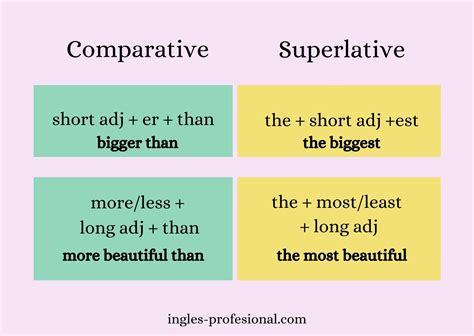
Per facilitare l'apprendimento e la memorizzazione, ecco una tabella che riassume le regole di formazione dei comparativi e superlativi in inglese, distinguendo tra diverse tipologie di aggettivi.
| Tipo di Aggettivo | Comparativo | Superlativo | Esempi Comparativo | Esempi Superlativo |
|---|---|---|---|---|
| Aggettivi Lunghi (2+ sillabe, non terminanti in -y) | More + aggettivo | The most + aggettivo | more expensive | the most expensive |
| more interesting | the most interesting | |||
| more historical | the most historical | |||
| Aggettivi Brevi (1 sillaba) | Aggettivo + -er | The + aggettivo + -est | taller | the tallest |
| bigger | the biggest | |||
| cheaper | the cheapest | |||
| Aggettivi Brevi terminanti in -y | Cambia -y in -ier | The + aggettivo che cambia -y in -iest | easier | the easiest |
| heavier | the heaviest | |||
| prettier | the prettiest | |||
| Aggettivi Irregolari | Forme specifiche (vedi sezione successiva) | Forme specifiche (vedi sezione successiva) | better, worse, further | the best, the worst, the furthest |
Comparativi e Superlativi Irregolari: Un'Attenzione Speciale
Come spesso accade nella lingua inglese, esistono delle eccezioni alle regole generali. Queste eccezioni riguardano alcuni degli aggettivi più comuni e usati, rendendo la loro memorizzazione ancora più importante.
Good, Bad e Far: I Casi Più Comuni
Good (buono):
- Comparativo: better (migliore)
- Superlativo: the best (il migliore)
Bad (cattivo):
- Comparativo: worse (peggiore)
- Superlativo: the worst (il peggiore)
Far (lontano):
- Comparativo: further (più lontano) o farther (soprattutto nell'inglese americano)
- Superlativo: the furthest (il più lontano) o the farthest (soprattutto nell'inglese americano)
Queste forme irregolari rappresentano, in fondo, le particelle stesse "more" e "most" come comparativo e superlativo della parola "much" (molto), ma estese a concetti qualitativi.
Esempi di utilizzo degli irregolari:
- Italian cuisine is better than English cuisine. (La cucina italiana è migliore di quella inglese.)
- Italian cuisine is the best in the world. (La cucina italiana è la migliore del mondo.)
- Jupiter is further from Earth than Mars. (Giove è più lontano dalla Terra di Marte.)
- Neptune is the furthest planet from the sun. (Nettuno è il pianeta più lontano dal sole.)
Adjectives Part 2: Comparative and Superlative Adjectives | English For Kids | Mind Blooming
La Differenza Chiave: Quando Usare il Comparativo e Quando il Superlativo
La distinzione tra comparativo e superlativo è fondamentale per esprimere correttamente il proprio pensiero.
Utilizzo del Comparativo: Si usa quando si vogliono confrontare due persone, luoghi o cose e stabilire una relazione tra di loro in termini di una qualità specifica.
- Esempio: Rome is bigger than Milan. (Roma è più grande di Milano.) → Si confrontano solo Roma e Milano.
Utilizzo del Superlativo: Si usa quando si vuole paragonare una persona, un luogo o una cosa a tutte le altre del suo gruppo o categoria, indicando che possiede quella qualità al grado più elevato.
- Esempio: Rome is the biggest city in Italy. (Roma è la città più grande d'Italia.) → Roma viene confrontata con tutte le altre città italiane.
Altri esempi per chiarire la differenza:
Consideriamo i prezzi di tre giacche:
The black jacket costs €50.
The grey jacket costs €40.
The blue jacket costs €30.
The grey jacket is more expensive than the blue one. (Comparativo: si confrontano la giacca grigia e quella blu.)
The black jacket is the most expensive one. (Superlativo: la giacca nera è la più costosa tra tutte e tre.)
Consideriamo le altezze di quattro persone:
Paul is 1.80m.
Helen is 1.75m.
Julie is 1.70m.
Alec is 1.65m.
Julie is taller than Alec. (Comparativo: si confrontano Julie e Alec.)
Paul is the tallest. (Superlativo: Paul è il più alto di tutto il gruppo.)
Consideriamo la bellezza di tre case:
The first house is really nice.
The second one is quite nice.
The third one isn’t nice.
The first house is nicer than the second one. (Comparativo: si confrontano la prima e la seconda casa.)
The first house is the nicest. (Superlativo: la prima casa è la più carina in assoluto, implicando che sia più carina anche della terza, anche se non esplicitamente menzionata nel confronto diretto.)
Esercizi Pratici per Rafforzare l'Apprendimento
Per consolidare la comprensione e la capacità di utilizzare correttamente comparativi e superlativi, è fondamentale esercitarsi. Di seguito, una serie di esercizi mirati.
Esercizio 1: Scegli la Forma Corretta
Completa le seguenti frasi scegliendo l'opzione corretta tra la forma comparativa o superlativa dell'aggettivo fornito tra parentesi.
You should wear this red dress to the party. I think it’s than this one. (pretty)
- a) prettier
- b) prettiest
It’s usually in June than in May, so you should visit us then. (warm)
- a) warmer
- b) warmest
Aunt Elsie is my relative. She’s 98! (old)
- a) older
- b) oldest
Paris is one of the cities I’ve ever visited. (beautiful)
- a) more beautiful
- b) most beautiful
Which is - France or Spain? (big)
- a) bigger
- b) biggest
The holiday I’ve had was when I travelled across the USA. (expensive)
- a) more expensive
- b) most expensive
I love all Robert Redford films but I think this one is the . (good)
- a) better
- b) best
My sister is than me. Her house always looks great. (tidy)
- a) tidier
- b) tidiest
Esercizio 2: Trasforma l'Aggettivo
Riscrivi le seguenti frasi trasformando l'aggettivo dato nella forma comparativa o superlativa appropriata, e inserendo "than" o "the" dove necessario.
This car is fast. That car is faster. (fast)
- This car is that car.
She is intelligent. Her sister is more intelligent. She is the most intelligent in the class. (intelligent)
- Her sister is her.
- She is in the class.
This is a big house. It is bigger than the other one. It is the biggest house on the street. (big)
- The other house is this one.
- This is on the street.
He is strong. His brother is stronger. He is the strongest of the three. (strong)
- His brother is him.
- He is of the three.
The journey was long. The return journey was longer. The longest journey was the one to the mountains. (long)
- The return journey was the first one.
- The journey to the mountains was .
Esercizio 3: Completa con Comparativo o Superlativo Irregolare
Completa le frasi usando la forma comparativa o superlativa irregolare corretta di "good" o "bad".
- This pizza is than the one we had last week. (good)
- His performance in the play was . (good)
- The weather today is than yesterday. (bad)
- That was the movie I've ever seen. (bad)
- I think my cooking is getting . (good)
- Unfortunately, the situation has become . (bad)
Risposte Esercizio 1:
- a) prettier
- a) warmer
- b) oldest
- b) most beautiful
- a) bigger
- b) most expensive
- b) best
- a) tidier
Risposte Esercizio 2:
- This car is faster than that car.
- Her sister is more intelligent than her. She is the most intelligent in the class.
- The other house is smaller than this one. This is the biggest on the street.
- His brother is stronger than him. He is the strongest of the three.
- The return journey was longer than the first one. The journey to the mountains was the longest.
Risposte Esercizio 3:
- better
- best
- worse
- worst
- better
- worse
Questi esercizi, focalizzati su diverse sfaccettature della formazione e dell'uso dei comparativi e superlativi, sono pensati per offrire un supporto concreto agli studenti, specialmente a quelli con DSA, aiutandoli a interiorizzare regole e eccezioni in modo graduale e strutturato. La ripetizione e la pratica costante sono elementi chiave per superare le difficoltà e acquisire fluidità nell'uso di queste importanti forme grammaticali inglesi.
tags: #esercizi #comparativi #inglese #dsa