
L'incontro tra il nazismo e la psicoanalisi ha rappresentato un nodo cruciale nella storia del XX secolo, un intreccio complesso di ideologia, persecuzione e trasformazione teorica. Le vicende storiche, le persecuzioni e le riflessioni intellettuali che ne sono scaturite hanno lasciato un'impronta indelebile sia sulla psicoanalisi stessa sia sulla comprensione dei fenomeni socio-politici come il nazismo.
Erich Fromm e l'Integrazione tra Psiche e Società
Erich Fromm, nato nel 1900 a Francoforte in una famiglia di origine ebraica, fu una figura centrale nell'esplorazione delle connessioni tra la psiche individuale e il contesto sociale. Dopo aver ottenuto il dottorato in sociologia, si avvicinò al pensiero freudiano e alla psicoanalisi, completando la sua formazione nell'Istituto di Berlino. Gran parte delle sue opere mirava a integrare la teoria freudiana con la critica storico-sociale di Karl Marx, autore che influenzò profondamente la sua visione della vita e dell'uomo. Fromm sosteneva l'interdipendenza tra il funzionamento psichico individuale e l'ambiente sociale.
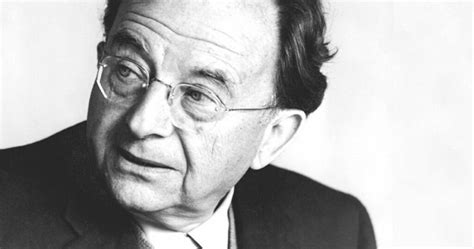
Insieme a figure come Adorno, Horkheimer e Marcuse, Fromm lavorò presso il prestigioso Institut für Sozialforschung di Francoforte. Fu uno dei principali esponenti, insieme a Harry Stack Sullivan, Karen Horney, Clara Thompson e Frieda Fromm-Reichmann, della corrente nota come Psicoanalisi interpersonale. Questa scuola di pensiero, sviluppatasi verso la fine degli anni '30, contestava i principi fondamentali della teoria freudiana, attribuendo maggiore rilevanza al contesto sociale e culturale. Dopo l'ascesa al potere dei nazisti in Germania, Fromm emigrò negli Stati Uniti nel 1934, dove compose la maggior parte delle sue opere. Scrisse numerosi saggi di carattere psicologico-sociale, riformulando in modo originale diversi concetti freudiani.
Il Concetto di Carattere Sociale
Un concetto chiave per comprendere l'analisi di Fromm è quello di "carattere sociale". Esso si definisce come la struttura caratteriale comune a gran parte dei membri di una determinata società, originata dalle condizioni economiche, geografiche, storiche e genetiche di quella società. La società, secondo Fromm, modella il tipo di carattere di cui ha bisogno per la sua sopravvivenza, facendo in modo che le persone "vogliono fare ciò che devono fare" per garantire il buon funzionamento del sistema.
L'Analisi Psico-Sociale del Nazismo
Fromm sosteneva che per comprendere il fenomeno del nazismo fosse necessario considerare simultaneamente i fattori psicologici e quelli socio-economico-politici. Interpretazioni che vedessero il nazismo esclusivamente come un fenomeno economico (le tendenze espansionistiche dell'imperialismo tedesco), politico (la conquista dello Stato da parte di un partito appoggiato da industriali e Junker) o psicologico (la follia di Hitler e dei suoi seguaci) sarebbero state riduttive.
According to Fromm, a portion of the German population submitted to the Nazi regime without admiring its ideology and political practices, offering only mild resistance. Another segment, however, felt a deep attraction to Nazi ideology and became fanatically attached to its promoters. The first group included the working class and the liberal and Catholic bourgeoisie. The second group comprised the lower middle class, consisting of small shopkeepers, artisans, and employees. The working class, after World War I, had harbored great hopes for the realization of socialism but had suffered an uninterrupted series of defeats, leading to a profound sense of resignation. Although still registered with their parties, they had internally renounced any hope in the effectiveness of political action. Consequently, they did not exhibit the inner resistance that might have been expected from their political convictions. Nazi propaganda exploited the feeling of isolation experienced by individuals, who, to avoid feeling alone, preferred to abdicate their moral principles and adhere to power groups.
The middle class, on the other hand, adhered with increasing fervor to Nazi ideology. Within this class, older members were more passive, while their sons and daughters were active militants.
Fromm attributed the seduction of the middle class by Nazi ideology to their social character: a love for the strong and hatred for the weak, pettiness, hostility, stinginess, suspicion of differences, and envy. The Nazi ideology, based on the spirit of blind obedience to a leader, hatred against racial and political minorities, the lust for conquest and domination, and the exaltation of the German people and the "Nordic race," could not help but exert a powerful attraction on these individuals, transforming them into fervent followers and militants of the Nazi cause. Members of this class harbored a strong desire for submission and an intense craving for power. These traits were amplified after World War I for several reasons: the economic decline of this class, accelerated by inflation and later by the depression following 1929, which shook the principles of saving and thrift; the collapse of the monarchy and state authority upon which the petty bourgeois had built their certainties; the loss of social prestige that reduced small merchants to the economic level of workers; and the loss of parental authority over children, consequent to the loss of authority of social institutions, which undermined the last bastion of middle-class security, the family. Furthermore, the economic decline of the middle class deprived parents of their economic function as guarantors of their children's economic future. The older generation became increasingly bitter and resentful, passive. The new generation aspired to action; the professional market was saturated, and economic independence, like that of their parents, was no longer conceivable.
The feeling of inferiority and growing social frustration of the middle class were transformed into nationalistic resentment, artfully exploited by National Socialism. The national defeat in World War I and the Treaty of Versailles became symbols onto which real, social frustration was transferred. Hitler was a typical representative of the lower middle class. He felt like a "zero," an "unknown," an outcast, and saw in the great German Reich, which for him symbolized social prestige and security, a possibility for redemption from his sense of nothingness.
However, beyond these psychological conditions, the rise of Nazism must also be understood in light of economic and political factors, particularly the role played by representatives of big industry and the Junkers (large landowners). Without their support, based on economic interests, Hitler would never have won.
This class of landowners, feeling their privileges threatened, argued that democracy was not working. In parliament (composed mainly of socialists and communists, and a growing number of Nazi deputies), this minority was opposed because the parliamentary system could no longer reconcile with the need to maintain the privileges of big industry and semi-feudal landowners. The exponents of these privileged groups hoped that Nazism would divert the emotional resentment threatening them towards other objectives and, at the same time, harness the nation to serve their economic interests. They were not disappointed, although they had to share their power with the Nazis and sometimes submit to them. Nazism, despite proving economically detrimental to all other classes, favored the interests of the most powerful groups in German industry. Thus, while Nazism psychologically exploited the discontent and mobilized the emotional energies of the middle class, it also forged, for imperialistic ends, relationships of mutual interest with German industrialists and the Junkers. Hitler presented himself as the messiah of the middle class, making promises he never kept. An exasperated opportunism was indeed a peculiar characteristic of Nazism.
The Authoritarian Character Structure
Fromm further expanded his analysis of Nazism by considering Hitler's authoritarian character structure. The authoritarian character is characterized by the simultaneous presence of sadistic and masochistic impulses. Hitler loved and despised the masses in a typically sadistic manner. The masses were meant to take pleasure in being dominated and to succumb to the will of the powerful personality. Simultaneously, he exalted them, provoking a sense of isolation towards those who did not belong. He vulgarized and instrumentalized the Darwinian theory of the strong dominating the weak and the instinct for species preservation to justify his sadism and lust for power. However, there is also a masochistic aspect to the authoritarian character: the aspiration to submit to a power of irresistible force, to annihilate the ego. The superior power to which Hitler submitted was God, Destiny, Necessity, History, Nature. The spirit of submission was systematically instilled in the masses: the individual is a nobody and counts for nothing; they must dissolve into a higher power and feel proud to participate in the strength and glory of this power. These two tendencies of the authoritarian character-the lust for power over men and the desire for submission to a stronger power-are coherently expressed in Nazi ideology, which appealed to people who, possessing a similar character structure, felt attracted and excited by this teaching and became ardent followers of the man who expressed what they felt. To this end, it was politically functional to create a hierarchy in which everyone had someone above them to submit to and someone below them towards whom they could feel powerful.
The Impact of Nazism on Psychoanalysis: Exile and Transformation
The rise of Nazism had a profound and devastating impact on the field of psychoanalysis. On March 24, 1933, Hitler requested and obtained full powers. As all Jewish activity was systematically outlawed, Freud's psychoanalysis (like Adler's individual psychology) was banned from Germany, along with institutions, organizations, and scientific journals linked to psychoanalysts. Many, initially, attempted to salvage what they could. The political situation was alarming not only in Germany and Italy but also in other European states. In France, the Stavisky affair had sparked riots and protests against government corruption. In Austria, socialist revolts in February 1934 were followed by brutal repression, and the Austrian Socialist Party was dissolved. Also in Austria, on July 25, Chancellor Dollfuss, who had only recently escaped an assassination attempt, was murdered by a group of Nazis. Murder was increasingly becoming a weapon in political struggles.
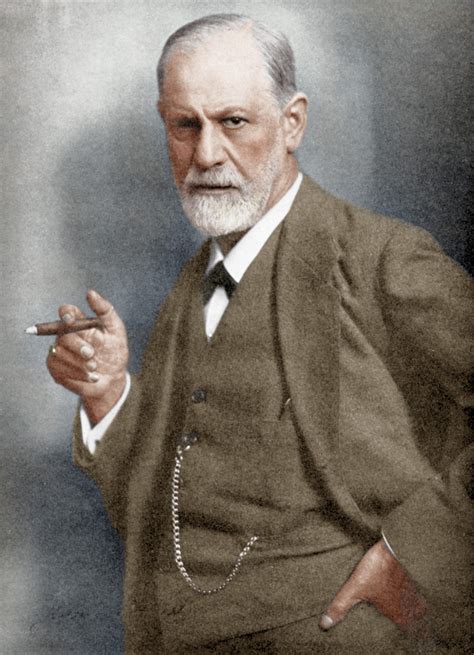
By 1935, individuals and nations began to feel powerless in the face of the imminent disaster they clearly foresaw but seemed hypnotized into being unable to defend against. Hitler enjoyed immense popularity among a large segment of the population. On September 15, 1935, the Nuremberg Laws were proclaimed, "for the protection of German blood and honor."
On May 5, 1936, Italian troops entered Addis Ababa, a victory that allowed Mussolini to proclaim the foundation of the Italian Empire, with the King of Italy also acquiring the title of Emperor of Ethiopia. In 1937, France and England formed an alliance, as did Italy and Germany, while the Spanish Civil War raged and Russia watched inscrutably. In 1938, with Hitler's invasion and annexation of Austria, even the blind realized that war was inevitable. On November 7, a young Polish Jew, Herschel Grynszpan, assassinated an official at the German embassy in Paris; this incident was used as a pretext to unleash pogroms (anti-Semitic popular riots, with massacres and looting, with the consent, if not the support, of the authorities) throughout Germany.
Many Austrian psychoanalysts emigrated. Freud, in this circumstance, was aided by the protection offered by Marie Bonaparte, the American embassy, and various English and American associations. Freud was able to leave for London with a good part of his family (though inexplicably leaving his sisters behind, who later died in a concentration camp). In London, the Freuds settled at 20 Maresfield Gardens; for Freud, this was meant to be his "last address on this planet."
The Ordeal of Exile and the "Saving Freud" Narrative
The situation became increasingly perilous for Sigmund Freud. Dr. Giuliana Proietti, a psychotherapist and sexologist from Ancona with extensive experience, notes that after graduating in medicine and specializing in neurology, Freud studied neuroses and human behavior. Everything seemed to be going well until 1938, when the situation deteriorated, and his homeland turned its back on him. Andrew Nagorski's book, "Saving Freud" (Simon and Schuster, pp. 352), addresses this question, as highlighted in an article in The Times of Israel on September 26, by journalist J. P. O’Malley. The book describes the final period of Freud's life, beginning with the advent of Nazism in Vienna. On March 15, 1938, Nazi troops invaded Austria, and 250,000 people triumphantly welcomed the entry of the ruthless dictator Hitler as he appeared on the balcony of the Hofburg Palace to deliver his speech. Nagorski's text recounts how Freud, confined to his office at Berggasse 19, was "automatically, from the outset, in danger as a Jew and as a public face of psychology, which the Nazis disparagingly branded as a Jewish pseudoscience." A "mix of different personalities from different social backgrounds and nationalities," Nagorski highlights, did everything they could to save their inspirer, "united by their devotion to Freud and his theories."
An article published in the New York Post on October 1, signed by Mary Kay Linge, sheds light on several details about the book and Freud's life. His departure from Vienna was particularly difficult and painful for him, as he had worked for 47 years in his home-study at Berggasse, welcoming his many patients with kindness and affability alongside his wife, Martha. He was an expert in analyzing the dark forces and animalistic drives of the human soul, which, ironically, were forcing him to leave as an elderly, ill man. Less than ten years earlier, he had explored "man's aggressive cruelty" in his essay "Civilization and Its Discontents." Freud, like many other secular Jews deeply assimilated into the surrounding society of his generation, had deluded himself into believing that the cultured, cosmopolitan, and stimulating Vienna and its people would never succumb to Nazism and expel its Jews. Weakened by illness, a throat tumor resulting from the compulsive smoking of his beloved cigars, Freud considered fleeing Vienna "inconceivable" and, according to various friends, "could not imagine life anywhere else." Not even the Nazi invasion and the destruction of his publishing house, Internationale Psychoanalytische Verlag, seemed convincing enough evidence for the stubborn and patriotic Freud. Part of his "rescue team," in addition to Jones and Bullitt, was Napoleon's great-granddaughter, Marie Bonaparte, wife of Prince George of Greece and Denmark, who regularly parked her royal car outside Freud's study and was his patient. Among the decisive factors that convinced Freud to flee was the Gestapo's arrest of his daughter Anna on that tragic March 22, 1938. After ten weeks and Marie Bonaparte's payment of a substantial "flight tax" (approximately $237,000 in today's money), Freud, Martha, and their daughter Anna boarded the fateful Orient Express train bound for Paris.
Laurence Kahn and the Linguistic Impact of Nazism on Psychoanalysis
Laurence Kahn's significant work, "Cosa ha fatto il Nazismo alla Psicoanalisi" (What Nazism Did to Psychoanalysis), directly addresses the profound and lasting effects of Nazism on psychoanalysis. The title itself is not a question but a statement: Nazism profoundly impacted psychoanalysis, with long-term consequences. These effects extend beyond the burning of Freud's works, the exile of numerous Viennese and German psychoanalysts, primarily to English-speaking countries, and the murder of some as opponents of the regime or as Jews. They also encompass the participation of some German, and therefore "Aryan," analysts-Bohem, Schultz-Hencke, Muller-Braunschweig in particular-in the "Aryanization" policy pursued by Matthias Göring, with the creation in 1936 of the Institute for Psychological Research and Psychotherapy, presided over by Carl G. Jung.
As Kahn meticulously demonstrates through a compelling and often documentary reconstruction, what the regime and, in this sense, Nazi culture did to psychoanalysis is a dynamic of action and reaction that primarily traverses the fundamental terrain of language, profoundly shaping the reception of the Freudian legacy.
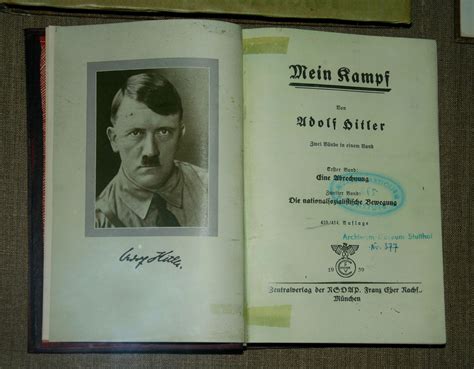
Associating her experience as a psychoanalyst, always attentive to the cultural dimension and its paradoxes, with a detailed knowledge of authors like Adorno, Mann, and Kertész, and rereading, with these guides, passages that are otherwise difficult to tolerate, such as those from Mein Kampf, Laurence Kahn invites us to recognize in words, concepts, lines of research, and even therapeutic propensities, the deep traces of what Nazism did to psychoanalysis.
Laurence Kahn is a titular member and training analyst at the Association Psychanalytique de France, of which she served as president from 2008 to 2010. She is the author, among other works, of Cures d’enfance (2004; Italian trans., 2006), Faire parler le destin (2005), L’écoute de l’analyste (2012), and Le psychanalyste apathique et le patient postmoderne (2014; English trans., 2019). She was part of the editorial board of Nouvelle revue de psychanalyse.
Kahn's rigorous argumentation makes evident the extent to which the linguistic perversion that enabled mass murder has profoundly marked the reception of the Freudian heritage. By combining her own experience with a detailed knowledge of authors like Adorno, Mann, and Kertész, and rereading passages of Mein Kampf with these references, Kahn invites us to recognize the deep traces of "What Nazism Did to Psychoanalysis."
Linguistic Perversion and the "Purification" of Psychoanalytic Language
According to Kahn, the primary target of National Socialism was language itself, leading to a "specific seismic event that struck the fundamental notions of psychoanalysis." Through a process where Nazism created a perversion of what Freud understood as psychic economy, leading to the idolatry of the drive and the contempt for reason, Kahn scrutinizes the concrete mechanisms of destruction that influenced language and thought. The outcome was the abandonment of a more enigmatic language, dear to Freud, and of certain core concepts, such as "drive" (Pulsione), in an attempt by the psychoanalytic community to distance itself from a pervasive cultural appropriation by National Socialism.
Contemporary psychoanalysis, Kahn argues, has not sufficiently accounted for the clinical and theoretical disorientation inflicted by the Nazi movement. By addressing key topics such as trauma, transgenerational issues, silence and secrecy, and the depredation of culture, it has, alongside grandiloquent words like "victim," "persecuted," and "atrocity," fueled a hope of being able to liberate itself from the Shoah. As early as 1930, Freud affirmed that "each individual is virtually an enemy of civilization," and many years later, Imre Kertész would echo this sentiment, recalling that the decline of the world has an origin far deeper than what can be understood through reason and science alone.
Kahn's research, as detailed in her volume Cosa Ha fatto il Nazismo alla Psicoanalisi (2023), stems from long-standing questions about the observation that psychoanalysis has gradually become impoverished of those elements that once defined it as an "epistemology of the unsettling," transforming instead into a tranquil psychology. She specifically explores the impact of Nazism on the evolution of contemporary psychoanalysis, focusing on the process that led to a "linguistic purification," a veritable purge.
Freud sought the origin of barbarism not so much in historical societal transformations but within the configuration of each individual, stating that "each individual is virtually an enemy of civilization." Contemporary psychoanalysis, Kahn suggests, has not fully grasped the clinical and theoretical disorientation inflicted by the rise of the Nazi movement, thereby fostering a hope of liberation from the Shoah. She aligns with Kertész's view that the world's decline has a deeper origin than reason and science can fully comprehend.
This book, rather than focusing on the suffering of survivors or the empathetic listening to the traumas and pathologies of Shoah victims, concentrates on analyzing the concrete mechanisms of destruction that influenced language and thought. This approach seeks to understand how the Holocaust's effects on the psychoanalytic world manifested.
Freud, Adler e la pulsione di aggressività - L'inizio dello scisma della psicoanalisi
Hitler, Nazism, and Psychological Interpretations
The mind of Hitler and the phenomenon of Nazism have been subjects of intense interest for psychological disciplines. Riccardo Dalle Luche and Luca Petrini's well-documented volume, Adolf Hitler. Analisi di una mente criminale. Psicologia e psicopatologia del nazismo (Mimesis, 2020), cited by Massimo Recalcati, offers an anthology of interventions and testimonies on the subject. Recalcati's article, "Paranoia and Melancholy: Hitler's Lesson," published in Frontiere della psicoanalisi, explores the link between paranoia and melancholy in relation to Hitler and Nazism.
While Recalcati highlights the connection between melancholy and paranoia as a potential way out of melancholic states, the author expresses skepticism about its direct applicability to Hitler. The supposed melancholic phase in Hitler's youth might correspond more accurately to an objectively unhappy but not necessarily melancholic period. The episode at Pasewalk, where Hitler experienced temporary blindness after being exposed to gas and reportedly fell into a functional blindness upon hearing of Germany's defeat, is discussed. The author notes that distinguishing between true hallucinations, pseudo-hallucinations, and intrusive thoughts can be challenging for patients, suggesting that this symptom might not warrant excessive emphasis.
The idea that Hitler, deeply affected by his country's defeat, felt a duty to play a leading role and interpreted this as a providential destiny is presented as understandable. The author acknowledges significant common mechanisms between paranoia and Nazi (or Fascist) ideology, particularly the often unfounded perception of the "other" as a threat and unjust persecutor. However, the notion that Hitler's ferocious ideas constitute delusions, thus qualifying him as paranoid, is met with doubt.
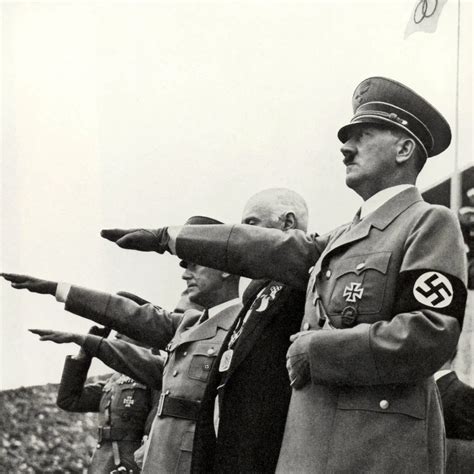
Drawing on phenomenological psychiatry, the author emphasizes the nuanced boundary between strongly held, even intense or ferocious, beliefs and delusions that diagnose psychosis. While acknowledging the inherent crudeness of such distinctions, the author stresses their necessity to avoid confusing delusion with reality.
Crucially, the author argues that neither Mussolini nor Hitler originated their actions or ideologies. Political murder and war are ancient human phenomena. The idea of one people subjugating, displacing, or exterminating another is equally ancient. The concept of eliminating "defective" or "useless" individuals was already discussed at the highest scientific levels, and sterilization laws for those deemed reproductively unfit already existed in the United States. Racist ideas of one race's superiority had permeated Europe since the discovery of the Americas and were cloaked in science during the colonial era. Antisemitism, within this broader racist framework, had been a part of European culture since the 15th century.
The author posits that the ease with which Hitler's and Mussolini's proposals resonated within their respective groups suggests that the "need" for Nazism and Fascism in those national groups found in these leaders suitable individuals to embody and interpret these sentiments. It raises the question of whether Hitler created Nazism or Nazism created Hitler, or perhaps a combination of both.
Political doctrines, even criminal and dangerous ones, can share mental mechanisms with paranoia without being outright psychotic. Confusing paranoid psychosis with such political doctrines is a tempting but avoidable error. This confusion risks obscuring the historical, economic, and ideological roots of political phenomena, which are essential to understand and counteract.
Furthermore, as Franco Basaglia noted, attributing Hitler's alleged "madness" has two detrimental effects: first, it assigns the most negative aspects of normality to psychosis, preventing individuals from examining the potentially negative aspects within their own "normality." Second, it suggests that the necessary responses to political doctrines and clinical paranoia are different. Political doctrines should be countered primarily through political struggle, while individuals following them might require clinical help to overcome persecutory mechanisms. Paranoid psychosis, conversely, demands treatment, with security measures employed only when there is a concrete risk of acting out.
tags: #male #nazismo #psicanalisi